You invested in an event app because you knew attendees expected one. You loaded the agenda, mapped the floor, lined up sponsors for in-app placements — and then, somewhere between badge pickup and the opening keynote, reality set in. A frustrating share of your attendees never downloaded it. Of those who did, many opened it once, glanced at the schedule, and never came back. The app you paid for quietly became the most expensive PDF you've ever distributed.
This is the open secret of event technology: building the app is the easy part. Getting people to install it, open it, and keep using it across a multi-day show is where most organizers lose the battle. The good news is that adoption is not luck — it's a designed outcome. With the right pre-show promotion, onboarding, incentives, and ongoing reasons to return, you can turn your app from a checkbox into the operating system of your event. Here's how to do it.
Start adoption before the doors open
The single biggest mistake organizers make is treating app adoption as something that happens on-site. By the time someone is standing in your venue, they're busy, distracted, and reluctant to fumble with an app store on conference Wi-Fi. The real work happens in the weeks before the show, while attendees are still planning and genuinely curious about what they're walking into.
Bake the app into every pre-show touchpoint
Every email, confirmation page, and reminder you send between registration and arrival is a chance to drive a download. Don't bury the app behind a generic "learn more" link. Instead, give people a concrete, time-sensitive reason to install it now:
- Registration confirmation: "Your ticket lives in the app — download it to access your QR code for fast check-in."
- The week-before email: "Build your personal schedule before sessions fill up. Sessions are starting to reach capacity."
- The day-before reminder: "Get real-time room changes and gate updates pushed straight to your phone."
Notice that none of these say "download our app." They each lead with a benefit the attendee wants — their ticket, a planning advantage, fewer surprises. The download is the means, not the message.
Make the value obvious and specific
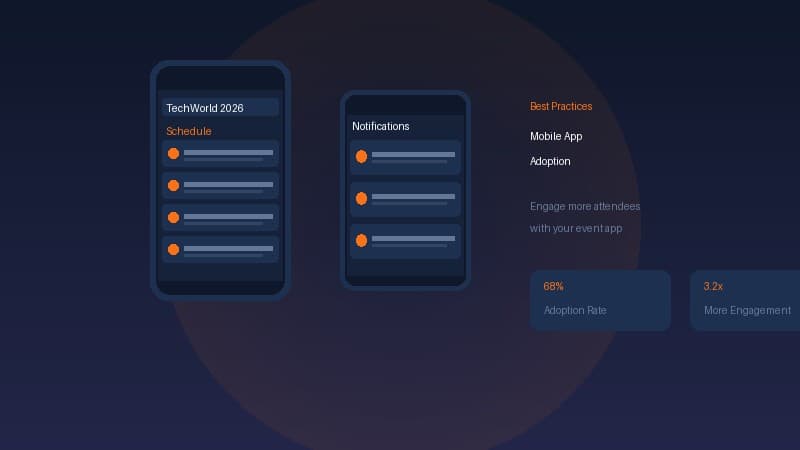
Attendees won't install an app to access features they could get from a website. They will install it for things only an app can do well: an offline-capable agenda they can personalize, push notifications about last-minute changes, an interactive floor map that shows them where they are, and a digital ticket or badge they can't lose. In our experience, the events with the highest adoption are the ones where a core, must-have action — like check-in or accessing your ticket — runs through the app rather than running parallel to it.
If your app and your website offer the same things, attendees will choose the website every time. Adoption follows exclusivity: put something attendees genuinely need behind the app, and the download stops being optional.
Remove every ounce of onboarding friction
You can generate all the pre-show interest in the world and still lose people at the install. The gap between "I should get the app" and a working, logged-in session is where most adoption leaks out. Treat that path as a conversion funnel and ruthlessly eliminate steps.
Lean on QR codes everywhere
The QR code is the most reliable on-ramp you have, because it collapses "find the right app, confirm it's the official one, install it" into a single scan. Use them generously and place them where attention naturally lands:
- On the back of every printed or digital badge
- On large signage at registration, where people are already standing in line
- On table tents and session-room placards
- On exhibitor booths, sponsor banners, and the printed program
- On the holding slides before keynotes and main-stage sessions
A QR code that lands attendees in the right app store — and, even better, pre-fills their event so the very first screen is relevant to them — turns a multi-minute chore into a five-second action. Wherever possible, deep-link the code so a returning user opens straight into the live agenda rather than a generic home screen.
Don't force a login before showing value
Requiring account creation before an attendee can see anything is a classic adoption killer. Let people browse the agenda, explore the floor plan, and look up sessions immediately, then prompt for login only when they want to do something personal — save a session, access their ticket, or message an exhibitor. People commit to accounts after they've seen the value, not before.
Have a staffed help moment at check-in
On-site, the registration desk is your highest-traffic adoption opportunity. Station a staffer or volunteer whose explicit job is to help attendees get into the app while they're already pausing to check in. A ten-second "Scan this and you'll have your schedule and map right here" from a friendly human converts far better than any sign. Many organizers find that a single dedicated app-help person at peak check-in hours moves their adoption numbers more than any other on-site tactic.
Use incentives — but tie them to behavior
Incentives work, but the wrong incentive just inflates download counts without creating real usage. The goal isn't to bribe people into installing; it's to reward the behaviors that make the app sticky. Structure incentives around doing things in the app, not merely having it.
- Gamified scavenger hunts: Award points for visiting exhibitor booths, attending sessions, or completing an in-app passport. This drives repeated opens across the whole event, not just one.
- Exclusive content drops: Speaker slide decks, bonus resources, or session recordings available only through the app.
- Early or app-only access: First crack at limited-seat workshops, networking sessions, or a sponsor giveaway entry.
- Daily prize draws: Entry requires a small in-app action — checking into a session, completing your profile — so the reward reinforces engagement.
The principle is the same throughout: reward the action you want repeated. A prize for downloading creates a spike; a prize for visiting ten booths or attending three sessions creates a habit.
Treat push notifications as a privilege, not a megaphone
Push notifications are the most powerful tool you have for pulling attendees back into the app — and the easiest to abuse. Get the permission, then earn the right to keep it by being genuinely useful. The fastest way to get an app deleted mid-event is to blast everyone with five promotional messages an hour.
Ask for permission at the right moment
Don't fire the notification-permission prompt the instant someone opens the app, before they understand why it matters. Instead, request it in context — for example, right after an attendee saves a session to their planner: "Want a reminder 15 minutes before this starts?" Permission granted in a moment of obvious benefit sticks; permission demanded cold gets denied.
Send notifications attendees will thank you for
The best pushes are timely, personal, and operationally useful:
- Personalized reminders: "Your saved session 'Scaling Without Burning Out' starts in 15 minutes in Room 4B."
- Real-time logistics: Room changes, schedule shifts, gate or shuttle updates — the things that genuinely rescue someone's day.
- Moment-driven nudges: "Lunch is now open in Hall C," or "The expo floor closes in 30 minutes — last chance to visit booths."
- Targeted, not broadcast: Segment by track, ticket type, or saved interests so people only get what's relevant to them.
Set an internal cap — a small handful of pushes per day — and hold to it. Every notification should pass a simple test: would a typical attendee be glad their phone buzzed for this? If you're not sure, don't send it.
Give exhibitors and sponsors a reason to drive opens
Here's a lever many organizers overlook: your exhibitors and sponsors have their own powerful incentive to get attendees into the app, because that's where their leads, scans, and visibility live. When you make the app central to the exhibitor experience, they become an unpaid adoption salesforce working your floor for you.
- Lead capture through the app: If exhibitors scan attendee badges or QR codes in-app to capture leads, every booth becomes a reason for attendees to have the app open.
- Booth content and offers: Let exhibitors post resources, demos, or app-only promo codes that attendees can only redeem in-app.
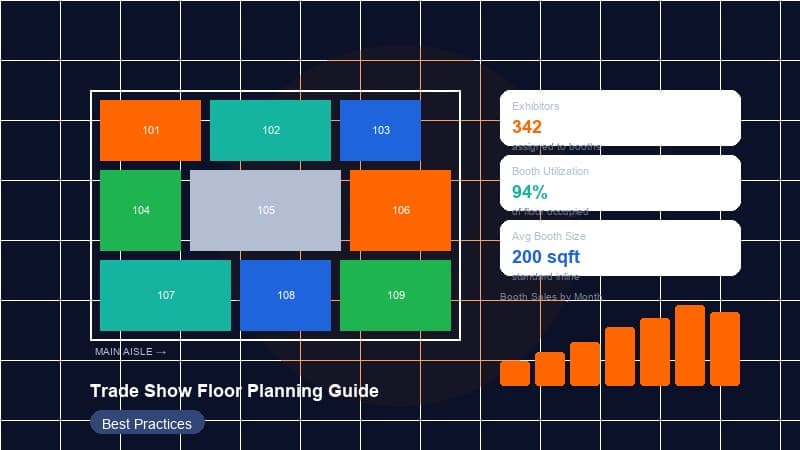
- The floor map as a discovery tool: An interactive floor plan that lets attendees find booths, bookmark must-visit exhibitors, and navigate the hall makes the app indispensable for getting around — and exhibitors love being findable. A platform like BoothHQ ties the floor plan, exhibitor profiles, and attendee planner together, so the map an attendee browses is the same one exhibitors manage their presence on.
- Sponsored in-app moments: A sponsored push, a featured listing, or a passport-stamp station gives sponsors visibility while giving attendees a reason to engage.
When you brief your exhibitors before the show, hand them a QR code and a one-line pitch they can use at their booth: "Scan to connect with us in the app." You've now multiplied your download prompts by the number of booths on your floor.
Measure adoption so you can improve it
You can't improve what you don't measure, and "we have an app" is not a metric. To treat adoption as a designed outcome, track it across the funnel and look for the specific stage where you're losing people.
The metrics that actually matter
- Install rate: Downloads as a percentage of registered attendees — your top-of-funnel number.
- Activation rate: The share of installers who completed a meaningful first action (logged in, saved a session, viewed the map). Installs without activation are vanity.
- Daily active users: How many open the app each day of a multi-day show — the truest measure of stickiness.
- Feature engagement: Which features get used and which get ignored, so you know what to promote and what to cut.
- Notification opt-in and open rates: Your leading indicator of whether push is helping or hurting.
Close the loop year over year
Adoption compounds when you learn from each event. After the show, look at where the funnel narrowed: if installs were high but activation was low, your onboarding needs work; if day-one usage was strong but day-two collapsed, you didn't give people enough reason to return. Pair the numbers with a short post-event attendee survey asking what they used the app for and what was missing. The real-time analytics in your platform should make these patterns visible while the event is still running — so you can fix a struggling feature mid-show, not just diagnose it afterward.
Key takeaways
- Adoption is designed, not lucky. Plan it as a funnel from pre-show promotion through on-site activation to repeat usage.
- Start before the doors open. Drive downloads through every registration email and reminder, leading with attendee benefits, not "download our app."
- Make the app exclusive. Put must-have actions — tickets, check-in, personalized scheduling — behind it so installing isn't optional.
- Kill onboarding friction. Use QR codes everywhere, let people see value before logging in, and staff a human app-help moment at check-in.
- Incentivize behavior, not downloads. Reward booth visits, session attendance, and profile completion to build habits, not spikes.
- Respect push notifications. Ask permission in context, cap your volume, and only send what attendees would thank you for.
- Recruit your exhibitors. Give them lead capture, in-app offers, and a findable floor map so they drive opens for you.
- Measure the whole funnel. Track install, activation, daily active users, and feature engagement — then close the loop each year.