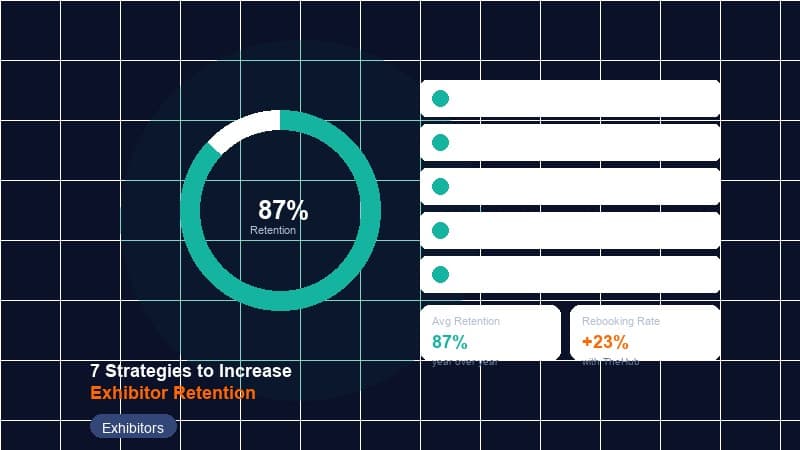
Exhibitor retention is the quiet engine behind every healthy trade show. When the same companies come back year after year, you spend less time and money chasing new logos to fill the floor, your sales cycle shortens, and your event gains the kind of momentum that attracts sponsors and attendees alike. Acquiring a brand-new exhibitor almost always costs more than rebooking a satisfied one: you have to find them, educate them, sell them, and prove the value of a show they have never attended. A returning exhibitor already knows the room.
The flip side is that churn is expensive and often invisible until renewal season, when a wave of "we're sitting this one out" emails lands at once. The good news is that retention is not luck. It is the product of deliberate choices an organizer makes before, during, and after the show. The seven strategies below are practical, repeatable, and built around the workflows that platforms like BoothHQ are designed to support.
1. Sell next year's booth on the show floor
The single highest-leverage moment in your entire retention cycle is while the current show is still happening. Your exhibitors are surrounded by foot traffic, conversations, and proof that the event works. That is the moment to ask them to rebook for next year, not three months later when the memory has faded and the budget conversation has cooled.
Set up an onsite renewal process so exhibitors can reserve their space before they tear down their booth. This can be as simple as a renewal desk near registration, but it works far better when it is digital and self-service:
- Let exhibitors view the floor plan and re-select their current space or upgrade to a better one directly from their phone or a kiosk.
- Offer a clear early-bird rate that rewards committing onsite, so there is a real reason to act now rather than later.
- Capture a deposit or full payment on the spot to lock the commitment in place.
BoothHQ's onsite booth renewal and self-service booth sales tools are built for exactly this: the exhibitor sees real-time availability, picks their spot, and pays without waiting on a sales rep. Every booth renewed on the floor is one you do not have to win back from scratch.
2. Deliver and prove ROI with lead capture and post-show reports
Exhibitors do not renew because the carpet was nice. They renew because they believe the show made them money. Your job is to help them generate that return and then make the return impossible to ignore.
Start with lead capture. If an exhibitor leaves your show with a stack of business cards and no system, the leads go cold and the value evaporates. Give every exhibitor a simple way to scan, qualify, and tag attendee leads in the moment, so the data is clean and ready to act on the day the show ends.
Then close the loop with a post-show ROI report. Within a few days of the event, deliver each exhibitor a clear summary of what they earned:
- Total leads captured and how they were qualified.
- Booth traffic and engagement, where you can measure it.
- A side-by-side comparison to their previous year, so growth is visible.
An exhibitor who can walk into their next budget meeting with a one-page report showing "we captured 240 qualified leads at this show" will fight to keep their spot. An exhibitor with no numbers will be the first line item cut.
When you provide both the tools to generate leads and the reporting to prove it, you are not just hoping for a good ROI conversation at renewal time. You are arming your exhibitors to make the case for you.
3. Make exhibiting easy with one portal, clear deadlines, and a resource center
Friction is a silent killer of retention. Every confusing email, missed deadline, and "who do I ask about shipping?" moment chips away at an exhibitor's willingness to come back. Many exhibitors who do not renew were not unhappy with the show itself; they were exhausted by the logistics around it.
Consolidate everything into a single exhibitor portal so there is one place to go for booking, payments, documents, and tasks. Pair it with an Exhibitor Resource Center (ERC) that answers the questions exhibitors ask every year before they have to ask them:
- Setup and teardown times, shipping and drayage instructions, and electrical or A/V orders.
- Booth design rules, badge ordering, and lead-retrieval setup.
- A clear, dated deadline checklist with automated reminders, so nothing is missed by accident.
BoothHQ's exhibitor resource center centralizes this so your team answers fewer one-off emails and your exhibitors feel supported instead of stranded. An exhibitor who had a smooth, well-organized experience remembers it, and that ease is one of the cheapest forms of loyalty you can buy.
4. Stay engaged year-round, not just at renewal time
If the only time an exhibitor hears from you is when you want their money, your relationship is purely transactional, and transactional relationships are the easiest to walk away from. The organizers with the strongest retention treat the months between shows as relationship-building time, not dead air.
Build a simple year-round engagement rhythm:
- Share attendee and industry insights, registration milestones, and early agenda news so exhibitors stay connected to the show's momentum.
- Spotlight exhibitors in your newsletters and social channels, giving them visibility they value.
- Check in personally with your largest and most strategic exhibitors well before renewal, so you hear concerns early enough to act on them.
The goal is for renewal to feel like the natural next step in an ongoing relationship rather than a cold ask. When you have been delivering value all year, the rebooking conversation is a formality, not a pitch.
5. Offer better booth placement and clear upsell paths
Booth location is one of the most emotionally charged parts of exhibiting. A great spot drives traffic and signals importance; a poor one breeds resentment that surfaces at renewal. Use placement as a retention and growth lever, not just a logistics task.
Reward loyalty and commitment with priority placement. Exhibitors who renew onsite or early should get first pick of the best locations next year, and they should know that is the rule. This turns the floor plan into an incentive: act early, get a better spot.
At the same time, open clear upsell paths so growing exhibitors can spend more with you when they are ready:
- Larger or premium booth spaces in high-traffic zones.
- Sponsorship opportunities that extend their brand beyond the booth, from signage to sessions to digital placements.
- Add-ons like enhanced listings, lead-retrieval upgrades, or featured placement in your event app and directory.
An interactive floor plan and built-in sponsorship tools let exhibitors see and select these options themselves, turning what would be a manual sales push into self-service revenue. Retention and account growth become the same motion.
6. Gather feedback and visibly act on it
You cannot fix what you do not know about, and exhibitors who feel unheard quietly disappear. A structured feedback loop does two things: it surfaces problems while you can still address them, and it tells exhibitors that their experience matters to you.
Send a focused post-show survey while the experience is fresh, and keep it short enough that busy people actually finish it. Ask about the things that drive renewal:
- Lead quality and quantity, and whether the show met their goals.
- The exhibiting experience itself, from move-in to teardown.
- Whether they intend to return, and if not, why not.
The half that matters most is what you do next. Close the loop by telling exhibitors what you changed because of their feedback: better signage, easier load-in, a revised floor plan. An organizer who says "you told us the loading dock was a bottleneck, so here is what we fixed" earns trust that no discount can buy. Watch for at-risk exhibitors in the responses and reach out personally before they reach the decision to leave.
7. Reward loyalty and make staying worth it
Finally, give your long-term and committed exhibitors concrete reasons to stay that a first-year competitor cannot match. Loyalty should come with tangible benefits, not just a thank-you note.
Build a loyalty framework that recognizes both tenure and commitment:
- Multi-year and early-renewal pricing that protects loyal exhibitors from rate increases.
- Tiered benefits for returning exhibitors, such as priority placement, complimentary badges, or marketing inclusions.
- Public recognition for milestone exhibitors who have been with the show for many years.
The point is to make the cost of leaving feel real. When staying comes with better rates, better spots, and visible appreciation, an exhibitor weighing whether to return has to give up something concrete to walk away. That is the position you want them in every renewal season.
Key takeaways
Exhibitor retention is built, not wished for. Pulling these seven strategies together gives you a system that works across the entire event cycle:
- Sell next year onsite while enthusiasm and proof are at their peak, backed by early-bird pricing.
- Prove ROI with lead capture during the show and clear post-show reports afterward.
- Reduce friction with one portal, a resource center, and automated deadlines.
- Engage year-round so renewal is a relationship, not a cold ask.
- Use placement and upsells to reward commitment and grow accounts.
- Collect feedback and act on it visibly, catching at-risk exhibitors early.
- Reward loyalty so staying is clearly worth more than leaving.
None of these require heroics. They require the right workflows and the discipline to run them every cycle. BoothHQ brings onsite renewal, self-service booth sales, lead and ROI reporting, the exhibitor resource center, and sponsorship tools into one platform so retention becomes part of how your show operates, not a scramble you face once a year.